


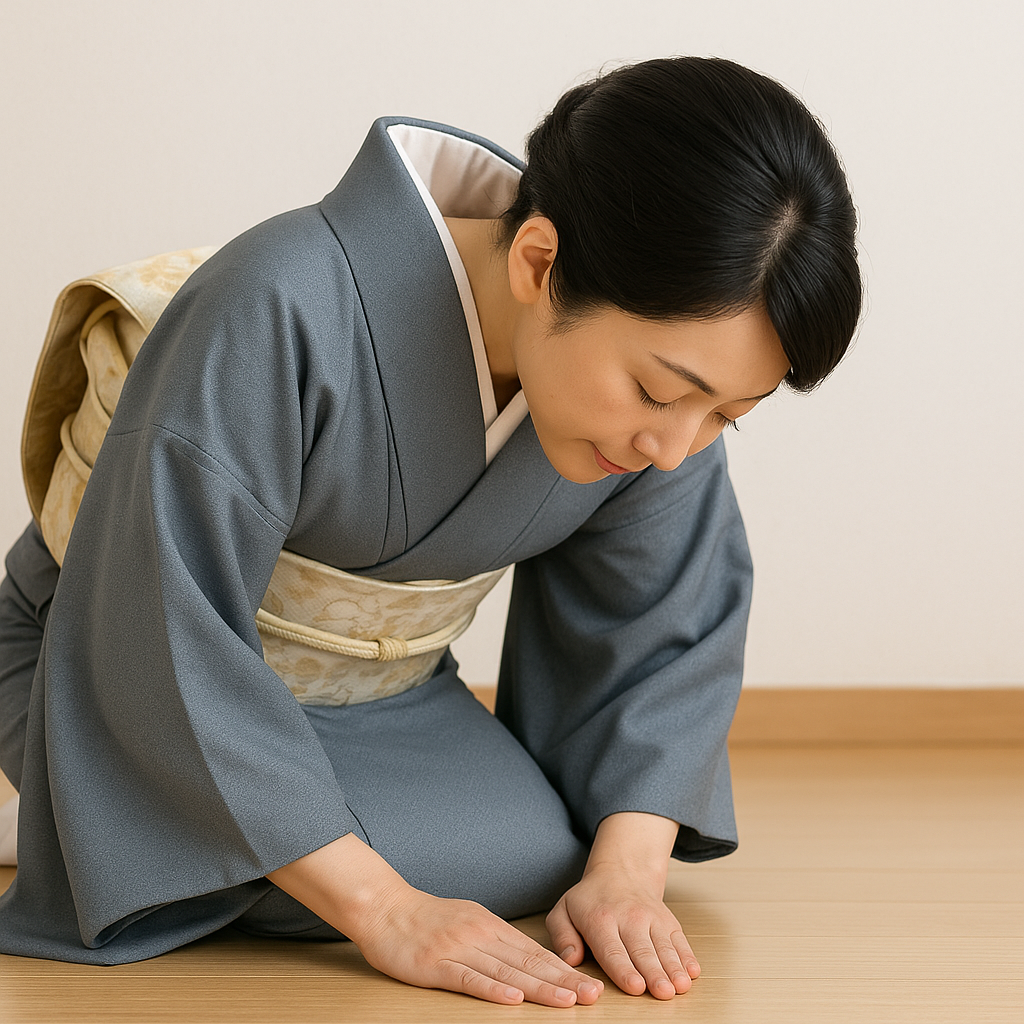
The Meaning Behind the Bow
Bowing in Japan expresses respect, gratitude, humility, or apology — often without the need for words. It can replace greetings like “hello,” show appreciation like “thank you,” or convey remorse like “I’m sorry.”
Historically, bowing developed from ancient Chinese court customs and later gained influence from Buddhism, which emphasized humility, and samurai-era etiquette, which codified gestures of respect and loyalty. Over time, bowing became woven into Japan’s social fabric as a universal sign of sincerity.
 The Three Common Types of Bows
While not rigidly fixed, Japanese etiquette guides often describe three general categories of bows based on angle and formality:
- Eshaku (会釈) — The Light Bow
A small, quick bow of about 15 degrees, used for casual greetings or acknowledgment. You might use it when passing a coworker in the hallway or thanking a store clerk. - Keirei (敬礼) — The Polite Bow
A deeper bow of around 30 degrees, used in formal settings — such as meeting someone for the first time, thanking a teacher or supervisor, or greeting clients. It’s held briefly to show respect and attentiveness. - Saikeirei (最敬礼) — The Deepest Bow
The most formal bow, about 45 degrees or more, used to show deep gratitude, apology, or reverence — for example, at religious sites, official ceremonies, or when making a heartfelt apology. The depth and duration emphasize humility and sincerity.
These categories are guidelines, not strict rules. Everyday bows may vary slightly in angle, duration, or posture, depending on context and personal habit.
 Bowing Tips for Learners
- Keep your back straight and bend from the waist, not the neck.
- Hands should stay at your sides (for men) or gently folded in front (for women).
- Hold the bow for one or two seconds for casual situations; longer for formal or apologetic ones.
- Avoid eye contact while bowing — looking downward signals humility.
Bowing is more than a social custom — it’s a reflection of Japan’s deep respect for others and awareness of harmony in human relationships. Learning to bow properly is more than etiquette; it’s a way to communicate sincerity and understanding in the Japanese way.